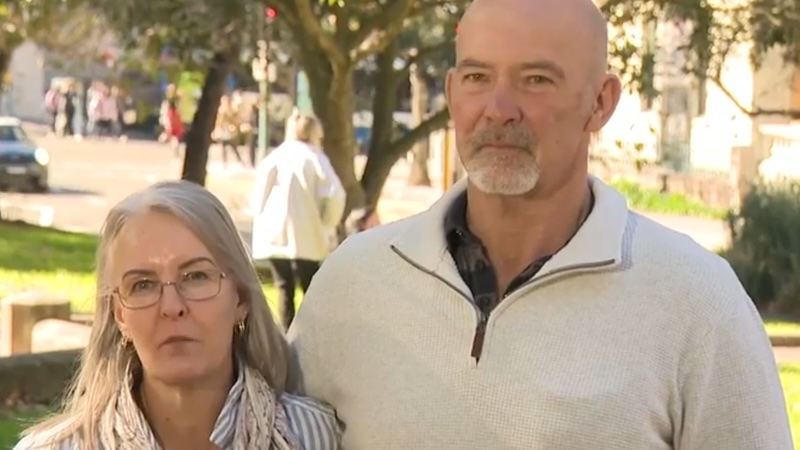
Wayne & Cheryl Troy
Surviving Cholangiocarcinoma
Introduction
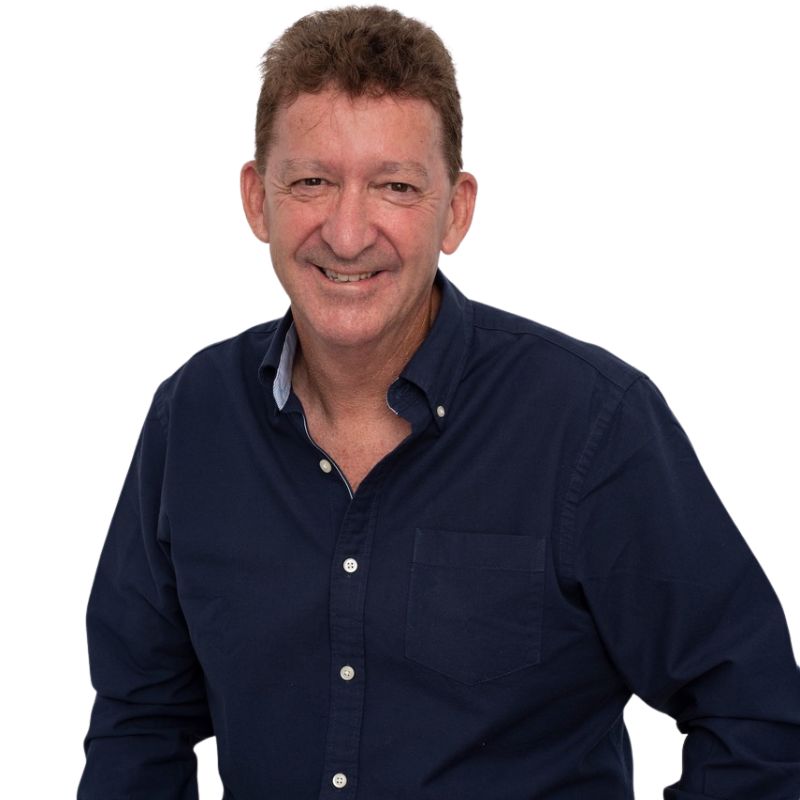
by Steve Holmes
Claire and I met Wayne and Cheryl Troy in Sydney last year.
Channel 7 had brought us together to talk about cholangiocarcinoma and a new drug that has since been listed on the PBS.
Wayne had travelled down from regional New South Wales. A farmer. Country grounded. Cheryl steady beside him.
I’m from the Gold Coast.
Different landscapes.
Same diagnosis.
Before the interviews began, we stood together and swapped stories, surgery, treatment, the trial-and-error path that only makes sense once you’ve lived it. There’s a quiet understanding that passes between people who have walked this terrain. No need for drama. Just recognition.
I was taken upstairs first into an office at the Garvan Institute of Medical Research for my interview. Wayne and Cheryl waited their turn. When they were called, they were escorted across the road to a leafy park for their segment.
That was the last we saw of them that day.
But they left Claire and me with something steady.
They are country people in the best sense of the word, calm, measured, generous. No performance. No noise. Just grounded presence.
And it was easy to see why they were doing well.
For the past two years, Wayne has been on a clinical trial of an oral targeted drug called Tibsovo.
Holding Their Ground,
Surviving Cholangiocarcinoma
Wayne was 58 when his diagnosis came, and it wasn’t a cancer conversation that sent him to the doctor in the first place. He had pain in his kidney area and decided to get it checked.
“Wayne had pains in his kidney area and decided to go straight to the doctor,” Cheryl said.
His kidneys were fine. But the scan revealed something unexpected in his liver. Further investigation confirmed it was cholangiocarcinoma, a cancer of the bile ducts, part of the digestive system that most people have never heard of until it enters their life.
For Wayne and Cheryl, that was the moment everything shifted.
Cholangiocarcinoma is often silent in its early stages. Many patients present with advanced disease. Wayne moved quickly through the standard pathway: surgery first, then chemotherapy, and later trial immunotherapy. Each step carried hope, but also the reality that if the disease persisted, the next decision would matter even more.
When first-line treatments do not eliminate the cancer, the pressure changes. It becomes less about broad treatment and more about precision.
Genomic testing identified an IDH1 mutation in Wayne’s tumour, a specific change present in roughly one in five patients with this disease. That finding opened a door.
Wayne entered a clinical trial of an oral targeted therapy called Tibsovo, a drug designed to act specifically on that mutation.
He has now been on that therapy for two years.
“The last scan that was done, everything was stable,” Wayne said.
The tablets allow him to continue working on the farm, and he reports no significant side effects. For someone whose life is built around land and routine, the ability to keep working is not incidental; it is continuity.
The treatment itself costs nearly $19,000 a month. With its addition to the PBS, eligible patients now pay the standard co-payment, removing a financial barrier that would otherwise place it out of reach for many.
Doctors estimate around 90 Australians each year may now access this therapy through the PBS for those whose tumours carry the IDH1 mutation.
Wayne and Cheryl face this together. Calm. Steady. United.
Their story is not dramatic. It is structured.
A symptom was noticed.
A scan was performed.
Treatment attempted.
Escalation required.
A mutation was identified.
A therapy matched.
Ongoing monitoring.
Stable disease.
In cholangiocarcinoma, stability is not small.
It is ground held.
And for Wayne and Cheryl, it means still working, still planning, still here.

