
Mandy Wallace
Thirteen Years On: A Life Rebuilt After Perihilar Cholangiocarcinoma

Introduction
by Steve Holmes
When I write a patient story, I am not presenting inspiration. I am mapping what actually happened so it can be seen clearly.
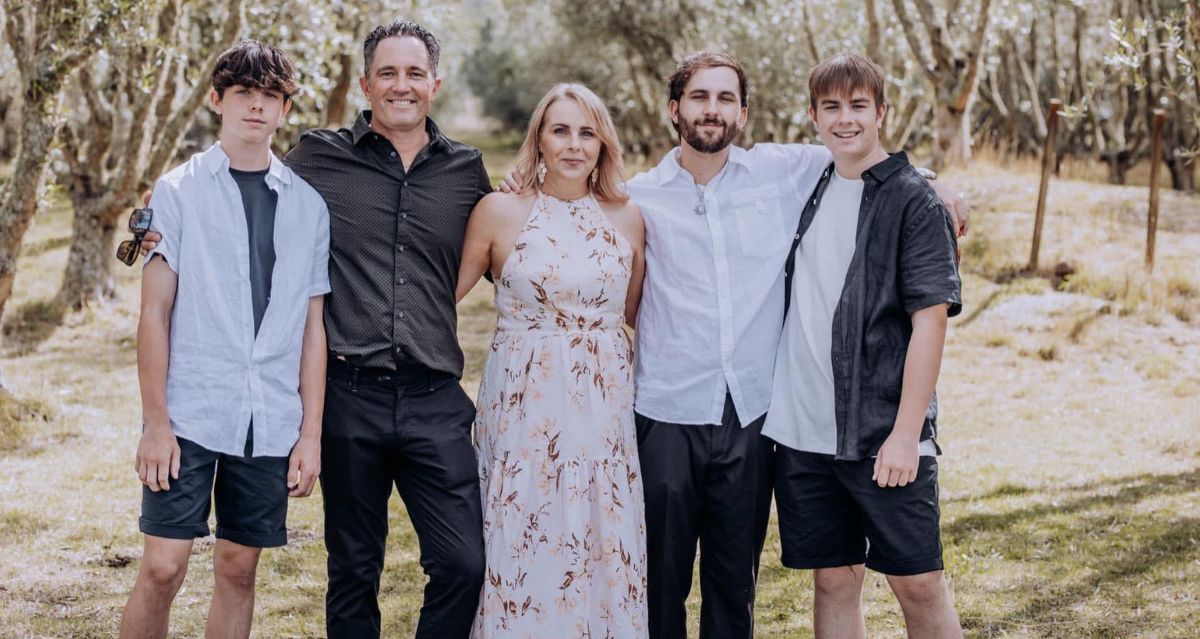
Mandy Wallace, cholangiocarcinoma survivor, was 39 when severe abdominal pain led her to emergency assessment. Imaging followed quickly, and within two weeks she was undergoing major liver surgery for perihilar cholangiocarcinoma.
Looking back, Mandy reflects, “I’m not sure I really dealt with it in those early weeks. Everything moved so quickly it felt unreal.”
When events move at that pace, the mind often trails behind the body. The full weight of it settled once chemotherapy began, when the reality of the journey became tangible.
Mandy’s story highlights a very important point.
There was no extended drift between symptom, scan, and surgical decision. The sequence moved forward, and it was completed.
Under pressure, it is not optimism that alters the trajectory. It is how quickly reality is recognised and acted on.
Thirteen years later, she remains well.
Through the cholangiocarcinoma community, Mandy and I connected as patients navigating the same terrain. Over time, that shared experience evolved into collaboration aimed at improving survival for others walking this path.
This is what a patient-led culture looks like when it matures. Survival is not the end point. It becomes contribution.
Below is how Mandy’s path unfolded.
Mandy Wallace Cholangiocarcinoma Survivor: Thirteen Years On
Mandy Wallace was 39 years old when she woke on her birthday with severe upper abdominal pain.
By lunchtime she had cancelled her celebration. By the afternoon she was in Emergency. The early assumption was gallbladder trouble. An ultrasound was arranged. That led quickly to a CT scan. Soon after, she was sitting in front of a liver surgeon.
Within two weeks of that first pain, she was in theatre undergoing major surgery.
There was very little time to process what was happening. When she woke, her anatomy had changed significantly. Seventy percent of her liver had been removed. A section of bile duct was taken. Her gallbladder was gone. Lymph nodes were removed. A Roux-en-Y reconstruction was performed.
The diagnosis was perihilar cholangiocarcinoma.
At that time there was no molecular profiling guiding treatment. The approach was direct and decisive. Remove what can be removed. Treat what cannot be seen.
She completed six weeks of 5FU with targeted radiation, followed by seven months of Gemcitabine and Cisplatin.
Looking back, Mandy says she is not sure she fully dealt with the diagnosis in those early weeks. Everything moved quickly. It felt unreal. The full weight of it settled more clearly once chemotherapy began. That was when the reality of the journey became tangible.
Early decisions were largely made by a proactive surgical team. Later, she became more actively involved. She searched for reliable information and found the Cholangiocarcinoma Foundation. That connection mattered. It provided context and reduced fear. It helped her understand what questions to ask and how to participate in her care.
She often says that knowledge is power. Not endless searching. Not panic. Structured knowledge that steadies the mind and allows you to engage with clarity.
When asked what she would do differently, she says very little. She had a strong team and moved quickly through a narrow window. If anything, she would ask more detailed questions before surgery so she was better prepared for the extent of what would be removed. Waking up to realise how much has changed can be confronting if you are not ready for it.
Her surgeon once told her to go home and live the rest of her life. He did not expect to see her many years later.
It has now been 13 years.
In perihilar cholangiocarcinoma, that span of time is uncommon. It reflects early symptom recognition, rapid imaging, a surgical window that was still open, aggressive resection, completion of chemotherapy, and disciplined follow-up. It reflects timing, anatomy, treatment, and steady engagement.
Mandy did not step away after surviving.
She remained present.
She became a mentor with the Cholangiocarcinoma Foundation and stays active within the New Zealand cholangiocarcinoma community. She continues to run her business, Hydralift Cranes, while supporting those who are at the beginning of the path she once walked.
She shares her successes and her lows. Not to impress, but to make the path clearer for someone else.
A Reflection
Stories like Mandy’s matter because they restore proportion.
Cholangiocarcinoma is serious. The statistics are sobering. But statistics describe groups. They do not pre-write individual outcomes.
Mandy’s story reminds us that when symptoms are investigated promptly, when surgical windows are recognised and acted on, and when patients stay engaged in their care, trajectories can change.
Thirteen years is an amazing milestone, and it has been time well spent.
And for someone reading this at the beginning of their own diagnosis, it is evidence that survival is not theoretical.
It is possible.

