
Jon Laing Cholangiocarcinoma Survivor
Nearing Seven Years, A Life Reclaimed

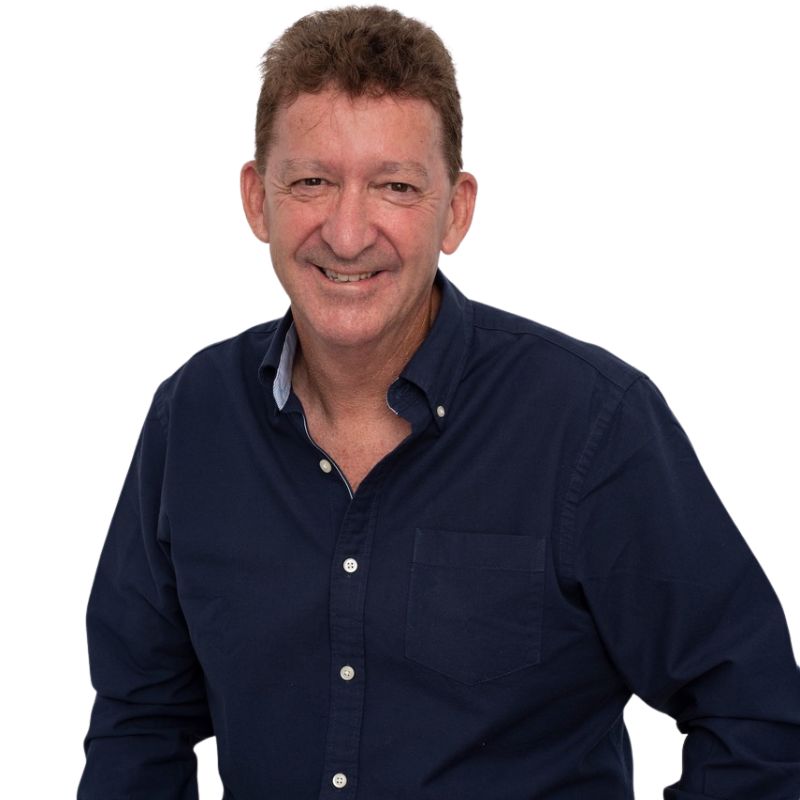
Introduction
by Steve Holmes
Jon Laing cholangiocarcinoma survivor shares what it takes to revisit a life-altering diagnosis.
When Jon stood up at our Melbourne Cholangio-Catch-Up and began speaking, the room went quiet. Not because her story was dramatic, but because it was steady.
Jon was 78 when she was told she had a blockage in her bile duct. Her liver function tests were “frightening.” She was told she was one month from jaundice and six months from death without surgery.
I know what it feels like to hear a timeline placed on your life.
That kind of sentence either freezes you or forces you to decide.
Jon decided.
She didn’t look for reassurance. She looked for experience.
Her first surgeon was kind. Competent. Performing one Whipple a month. The surgeon she chose was performing three a week.
I say this often, and I will keep saying it: repetition matters.
In long, complex surgery, repetition builds judgement. Judgement under pressure is not theoretical; it is what stands between complication and control.
Jon changed course. She travelled. She acted.
Then came the phase many people underestimate recovery. Twelve kilograms lost. Muscle stripped away at nearly eighty years of age. No drama about it. Just the slow, stubborn rebuild.
That part resonates with me.
Because surviving the surgery is one thing. Reclaiming your life afterwards is another.
Today, Jon is six years post-surgery. Still working. Still training. Turning eighty-five next birthday. There’s a new puppy in the house, Teddi, bringing joy and less sleep.
That detail matters more than it sounds.
It means life didn’t just continue. It resumed.
In cholangiocarcinoma, margins narrow quickly. Information fragments. Pressure accelerates. What determines trajectory is not optimism, but how clearly you can think and act inside that pressure.
Jon thought clearly. She acted deliberately. She rebuilt.
Six years on, she is still here.
“I am alive; I am here. Now it is my responsibility to make this work.”
Below is how it unfolded.
Six Years On. A Life Deliberately Reclaimed
Originally published 2023. Updated 2026 to reflect current status.
Part I: Who I Am
My Life, Strengths, and Connection to the Community
When Jon reflects on revisiting her journey, she says, “One has to go back in memory and reactivate the process that one went through.” It isn’t easy. But she knows it matters.
At 78, Jon considered herself reasonably fit. She was strength training once or twice a week alongside people half her age. That strength wasn’t accidental. It had been built over the years, including through a significant health episode four years earlier, when she discovered she had a faulty parathyroid gland.
“This gland regulates the amount of calcium in our body. My faulty gland was robbing my body of calcium,” she explains. “I had aching bones, aching bones from morning to night.” When the pain became intolerable, she saw her GP. Blood tests followed. The gland was removed. She recovered quickly and resumed training as advised by her chiropractor.
That was her pattern. If there was a solution, she found it and acted.
Then something shifted.
She began feeling breathless during workouts. She lost around three kilos without trying. Her trainer suggested the sessions had simply become more demanding. Jon wasn’t convinced.
At the same time, she and her husband, Peter, were planning a Christmas trip to Sweden. “Peter is a Swede, and we have only visited Sweden in the summer,” she says. “I was keen to experience a Swedish Christmas in winter.”
As a precaution before travelling, she requested blood tests.
That decision changed everything.
“I was told by my doctor to have a CT scan,” Jon recalls. During the scan, the radiology team immediately contacted her GP and recommended an MRI. “My doctor told me I had a blockage in my bile duct, and my liver function tests were frightening.”
Then came the sentence.
“He said I was one month away from jaundice and six months away from death.”
That is a sentence you don’t forget. It doesn’t fade. It sits with you, and it quietly asks what you are going to do next.
Her iron and haemoglobin were critically low, explaining the breathlessness.
As a trained nursing sister years earlier, Jon had never encountered this disease. “I can only assume that I am an optimist by nature, as I was scared but positive,” she says.
She anchored herself to one principle:
“Go for treatment where the EXPERIENCE is.”
Part II: Facing the Diagnosis
Trusting Instincts and Seeking the Right Help
Her GP recommended a Melbourne surgeon. “He was a very nice person,” Jon says. But something didn’t sit right.
“I considered him to be maybe a little old, only doing one operation per month, and I noticed when he walked, he had a bad back. I considered the length of the surgery and thought he would have a very stiff back!”
It was an instinctive reaction. She paused.
Then something unexpected happened.
A friend in Sydney called to check on her. Jon explained what was happening. Within forty minutes, that friend had arranged an appointment in Sydney with a high-volume hepatobiliary surgeon the following week.
“I Googled Haghighi, and he sounded good.”
Jon and Peter travelled to Sydney.
“He looked at my MRI and blood tests and said, ‘I can fix you!’ He told me how major the surgery was, a Whipple, which I had never heard of.”
He performed at least three Whipples per week.
The contrast was clear.
After meeting him, Jon’s fear shifted. “If anyone could help, I felt he was the one. He was decisive, confident, and unafraid.”
He requested only blood tests and imaging. He did not request a biopsy, avoiding potential spread, something Jon appreciated deeply.
She describes what guided her in that moment:
“An acute awareness of the human frailties of those we look to for help in these extreme, life-or-death situations.”
Waiting was not an option. Experience mattered.
Part III: The Lows
Recovery Is Not a Straight Line
Surgery took place on 8 December 2019 at Prince of Wales Hospital in Randwick.
In the lead-up, Jon managed her business, organised pet care, and prepared their home. “My husband is a violinist with the Melbourne Symphony Orchestra, and he was right there, my support,” she says.
The surgery went well. “I didn’t have any complications, I was very well taken care of, and I had no pain. I was lucky.”
She was told she was clear. No further treatment required.
Then came the reality of recovery.
After discharge, they stayed in a motel opposite the hospital. The return flight to Melbourne was harder than expected. “Walking to the taxi at the airport killed me. We should have stayed in the motel and spent Christmas there.”
At home, she could not eat. Her mouth burned. She lost significant weight.
“I asked my husband to take a photo of my tongue as it was burning. We sent the photo to Dr. Haghighi, who immediately said I had thrush from all the antibiotics.”
It was Boxing Day. They went to Cabrini Hospital. Tests confirmed it.
“I returned home at around 2 a.m., so thin I looked aged overnight. My poor husband didn’t know what to do with me.”
She survived on miso soup, green beans and watermelon. Slowly, she reintroduced soft foods. In total, she lost around 12 kilos, dropping to 46 kilos.
Regaining weight took six months.
Recovery required patience and stubbornness.
Part IV: Rebuilding Strength
After roughly two months, she began training again.
“I had lost all my muscle and had no fat on my body. My muscle loss was startling, and at my age, even more startling!”
But rebuilding was not optional.
“I hope that anyone reading this will find something they can relate to,” Jon says.
Her advice remains simple and direct:
“Trust your instincts. If you’re unsure, get another opinion.”
She continues to monitor her health closely.
“I’m always on guard, watching myself and staying alert to any changes.”
Part V: Beyond the Prognosis
From the moment she was told she had six months to live without surgery, Jon made a decision.
“I was not ready to give in to my misfortune.”
Recovery meant relearning how to eat. She followed a mostly vegetarian approach, managed blood sugar carefully, and rebuilt strength gradually.
She continued running her business. “It keeps me alive and interested in life.”
She says she will never feel completely normal. “The surgery is so invasive. But I am alive and treasure each day as a gift.”
Her first thought after waking from surgery remains the clearest summary of who she is:
“I am alive; I am here. Now it is my responsibility to make this work.”
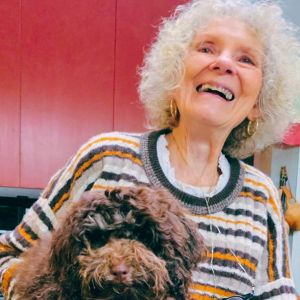
2026: A new puppy
Update, Six Years On
When Jon first shared her story, she was approaching five years post-surgery.
Today she is six years on.
She will turn 85 next birthday.
She is still training twice a week. Still running her business. Still watching her health carefully. Still making deliberate decisions about how she lives.
There is a new puppy in the house. Teddi has replaced the beloved dog in the original photo. She brings great joy and, Jon says with a smile, much less sleep.
The decision she made in that early moment still stands.
She is still here.

Not so good at selfies but here we are!
Peter and Jon
A Note of Gratitude
Jon, thank you for sharing your story, your insights, and your unwavering resilience. Your generosity in allowing us into your life through your experiences, your wisdom, and your strength offers not just inspiration but a profound uplift for those who follow in similar footsteps. Your words serve as a light, a guide, and a reminder that even in the face of uncertainty, there is immeasurable strength within our willingness, a pathway within our hope, and courage through our perseverance.
Your journey a source of strength for so many.
Warmest regards,
Steve
Do you have a story to share?
Email Steve@Cholangio.org
(Subject – My Caregiver/Patient Story)

